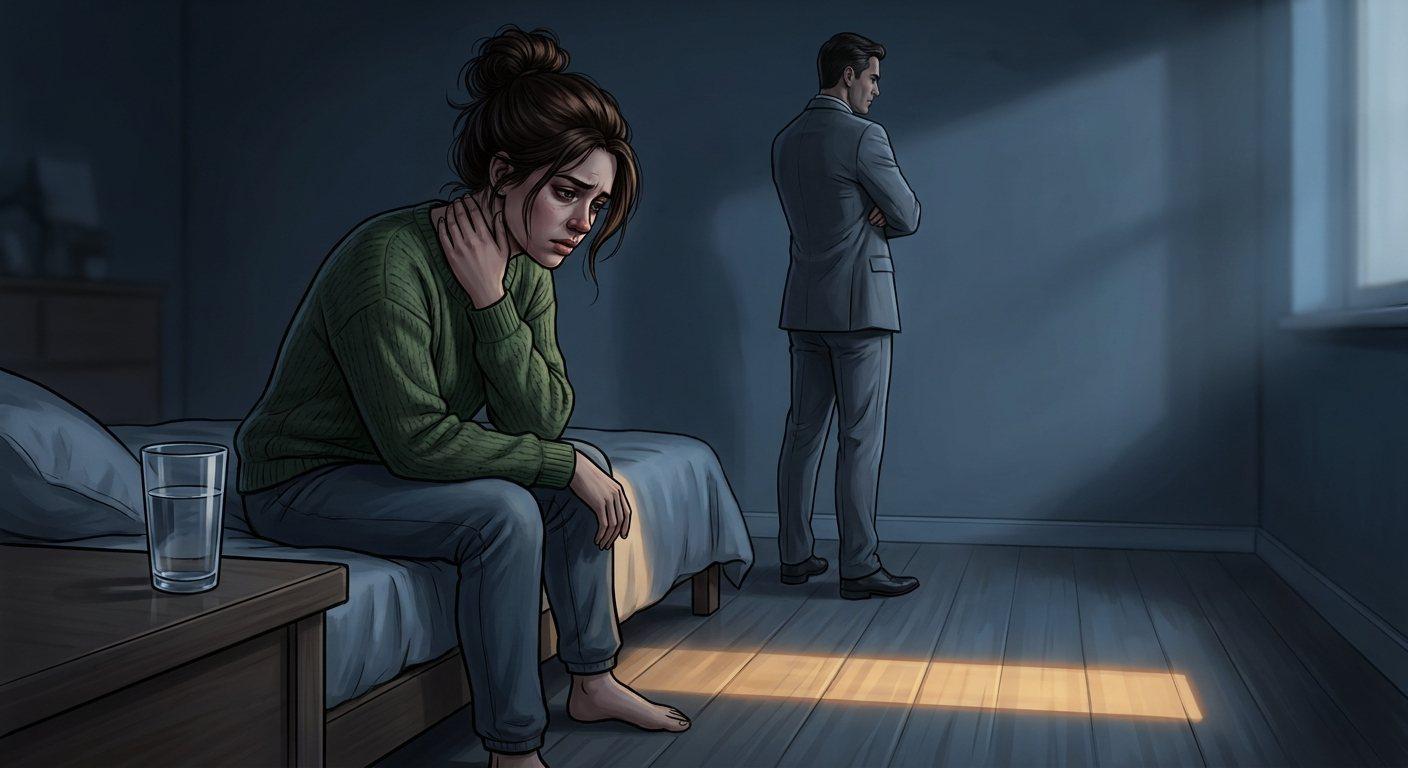
Narcissistic Abuse: Symptoms You Should Take Seriously
Foundation: Marion Kohn
The short answer
Narcissistic abuse leaves typical symptoms: self-doubt up to self-loss, anxiety and exhaustion, physical complaints no blood test explains, and a social withdrawal that hardly anyone notices from the outside. They arise because chronic relationship stress burdens the body just as visible violence does. The symptoms are a healthy reaction to an unhealthy situation, and recovery follows an order that this page sets out.
Perhaps you arrived here through a search like "narcissistic abuse symptoms", at night, exhausted, suspecting that your complaints might have something to do with one particular person. Then first things first: you are not imagining it.
A word about the term before we start: the word "victim" describes what was done to you, not who you are, and certainly not who you must remain. On this page we therefore speak of those affected.
Here you will find the typical consequences of a relationship with a strongly narcissistic person: the psychological, the physical and the social ones. You will learn why these symptoms arise and what really helps. The foundation is EMOSOPHIE® by Marion Kohn, and one clarification up front: this page makes no diagnoses. It helps you make sense of your experience, and shows you when and where to get support.
Why Can "Just Words" Make You Ill?
Many affected people hesitate for a long time to take their complaints seriously, always with the same argument: there were no blows. It was just words, looks, silence.
Exactly here lies the error. Your nervous system does not neatly distinguish between physical and psychological threat. A relationship in which you never know which version of the other person awaits you today, in which affection and devaluation alternate unpredictably and your perception is constantly called into question, puts your organism on permanent alert. Not for one evening, but for months or years. And permanent alert leaves traces, in mind and body alike.
For this experience the term "narcissistic abuse" has become established, sometimes people speak of a "narcissistic abuse syndrome". In all honesty: this is not an official medical diagnosis, you will not find it in any diagnostic manual. That does not make your complaints any less real. It only means professionals name them differently, for example as consequences of chronic relationship stress or psychological abuse. What matters is not the label. What matters is that you take seriously what your body and mind are reporting.
What Are the Psychological Symptoms of Narcissistic Abuse?
The psychological consequences affected people report most often are these:
Self-doubt up to self-loss. You question your perception, your memory, your judgement. After years of gaslighting, many affected people literally no longer know who they are and what they want.
Permanent tension. You move through your own life as if walking on eggshells, always on guard for the next mood change, the next accusation, the next freeze-out.
Rumination. Your mind replays conversations, searches for your mistake, plans the next word in advance. Why this brooding arises and how you interrupt it is covered in our guide on overthinking.
Emotional numbness. At some point you feel neither joy nor sadness properly, only emptiness. That is not a defect but a protective circuit of a system that has been overloaded too long.
Shame and guilt. You are ashamed of the situation and feel guilty for things that are not your fault. The constant blame reversal of the relationship has moved inside.
Low mood and anxiety. Many affected people develop depressive states, anxiety, or both over time. Important: whether it is a depression or anxiety disorder requiring treatment can and should only be assessed by a professional. Do not mistake these symptoms for a question of character, they are not.
What Physical Symptoms Does a Toxic Relationship Leave?
Chronic relationship stress rarely stays in the head. Typical physical consequences are:
Sleep problems. You lie awake although you are exhausted, or wake at 3 am and the thought carousel starts immediately.
Exhaustion that sleep does not fix. Even after days off or holidays you feel drained, as if your battery no longer charges properly.
Tension and pain. Neck, jaw, back, tension headaches: a body on permanent alert keeps its muscles on standby, around the clock.
Stomach and digestion. Irritable stomach, nausea before encounters, loss of appetite or binge eating. The digestive tract reacts particularly sensitively to chronic stress.
Racing heart and tightness. Palpitations, pressure on the chest or shallow breathing, especially during or after stressful contacts.
Susceptibility to infections. Whoever lives in alarm mode for months often falls ill more frequently, the constant stress drains the body’s defences.
And here is the most important paragraph of this page: always have physical symptoms medically checked as well. Not because your suspicion is wrong, but because the same complaints can also have other, treatable causes. "It is probably just the stress" is a sentence that punishes affected people twice: it leaves real illnesses undetected and takes away your validation when it really is the stress. See a doctor, describe your situation honestly, and take the examination seriously.
The Social Consequences: The Slow Disappearing
The third group of consequences shows up in no blood test, and is still the most underestimated.
Isolation. Friendships have gone quiet, family contacts have thinned. Sometimes because the narcissistic person actively worked on it. Often, though, because you lacked the energy, or no longer wanted to explain to anyone why you stay.
The mask. Outwardly you function: job, daily life, smile. Hardly anyone suspects what is going on at home. This constant double role costs enormous energy and reinforces the feeling of being alone with everything.
Distrust. Whoever has experienced closeness being used as a weapon no longer trusts even well-meaning people. Many affected people report that they can no longer accept compliments and suspect an agenda behind friendliness.
Performance dip. Concentration problems and the constant inner noise eventually hit work or studies, which feeds the self-doubt further.
If you recognise yourself here, one thought matters: these retreats were protective reactions, not character flaws. And they are reversible, step by step, at your pace.
Why Do Your Symptoms Make Sense?
As distressing as the list is, it carries a consoling core message, and it is the central idea of this page: your symptoms are a healthy reaction to an unhealthy situation.
Your system did exactly what it is built for. It responded to permanent threat with permanent alert, to unpredictability with vigilance, to constant devaluation with retreat. Nothing about you is broken. On the contrary, your reactions show that your perception works, even if it was silenced for years.
In the view of EMOSOPHIE® another layer comes on top: the exhaustion arises not only from the other person’s behaviour, but from the permanent inner conflict it forces you into. You give and give, against the growing certainty that it will never be enough. You sense that something is wrong, and doubt exactly that feeling at the same time. This state, living permanently against your own perception, is the most grinding part of the whole dynamic. Why the other person’s pattern works the way it does is explained in the guide "Understanding Narcissism". Why it so often hits the strong and the giving is shown on the page "The Narcissist and the Strong Woman".
From this framing follows the way out: the symptoms do not disappear through harshness against yourself, but by allowing the permanent alarm to end, through distance, safety and support.
Your symptoms are not weakness. They are proof that your system has been trying to protect you all along.
What Helps Now to Get Your Strength Back?
Recovery from a narcissistic relationship follows an order, and the order matters:
First: take reality seriously, including your symptoms. The log from the tip above is a good start. You do not have to prove anything to anyone, but you may finally believe yourself.
Second: get professional support. Physical complaints belong in medical hands. For the emotional burden there are psychotherapists and counselling centres, and not only when nothing works anymore. If you have thoughts of harming yourself, reach out immediately to a crisis line: in Germany, the TelefonSeelsorge is available free of charge around the clock on 0800 111 0 111. And if you are being threatened or fear for your safety: in Germany the "Violence against Women" helpline is reachable at any time on 116 016; elsewhere, please contact your local services.
Third: reduce the source of the alarm. As long as the daily bombardment continues, no system can come to rest. How to implement distance and boundaries in practice, from clear sentences to the grey rock method, is covered in the guide "Dealing with Narcissists".
Fourth: give recovery time and nourishment. Sleep, movement, people who are good for you, and the step-by-step reclaiming of the things that were once yours. How regeneration after long exhaustion works is deepened in our guide on stress and emotional exhaustion.
Do not count in days, count in months, and do not expect a straight line. Relapses into old doubts are part of the way. They do not mean you are back at the start.
How Sophia Accompanies You
Between doctor’s appointments and therapy sessions lies everyday life, and that is where the real work happens: the moments when the doubts return, the carousel starts spinning, or you simply need someone who listens.
For these moments there is Sophia, the AI emotional companion by EMOSOPHIE®. With her you can record how you are really doing, day by day, without having to pull yourself together. She helps you recognise triggers and patterns, take your perception seriously, and see the small steps of progress that get lost in daily life.
Your conversations remain anonymous and encrypted, and Sophia is there whenever the alarm goes off, even at 3 am. But one thing very clearly: Sophia does not replace psychotherapy, medical treatment or crisis support. She is the companion in between, the place where you can sort out what you experience, while you get the support you deserve.
Frequently Asked Questions
Typical is a combination of psychological and physical consequences: massive self-doubt up to doubting one’s own perception, permanent tension, rumination, emotional numbness, shame and guilt, and depressive states or anxiety. Physically, sleep problems, persistent exhaustion, muscle tension, digestive complaints and increased susceptibility to infections often appear. Extent and mixture vary from person to person.
Frequently reported are sleep disturbances, exhaustion that sleep does not fix, tension with head, neck or back pain, digestive complaints, racing heart, tightness in the chest, and more frequent infections. The cause is the nervous system’s permanent alert under chronic relationship stress. Important: always have such complaints medically checked as well, they can equally have other, treatable causes.
No. "Narcissistic abuse" and "narcissistic abuse syndrome" are widespread descriptions, but not diagnoses from the official manuals. That changes nothing about the reality of the consequences described. Professionals usually classify them as effects of chronic relationship stress or psychological abuse. For your treatment the label is secondary, what counts is that you get support.
Because your nervous system reacts to threat, not to its form. Unpredictability, constant devaluation, silent treatment and the permanent questioning of your perception put the organism on the same permanent alert as tangible danger. Psychological abuse is abuse, and its consequences are measurable, even without a single blow.
As a rule they improve considerably once the permanent alarm ends: through distance or clear boundaries, professional support and time. Many affected people feel first relief within weeks of reduced contact, the deeper recovery usually takes months. The course is rarely a straight line, setbacks are part of it. Persistent or severe complaints belong in professional hands.
At the latest when symptoms impair your daily life, persist or worsen, and always with depressive states, strong anxiety, or physical complaints without findings. You need immediate professional help with thoughts of harming yourself (in Germany: TelefonSeelsorge 0800 111 0 111, around the clock) or when you are being threatened (in Germany: "Violence against Women" helpline, 116 016).