Self-assessment based on EMOSOPHIE®
Am I a narcissist?
Based on the work of: Marion Kohn, “No Love” (2018)
Maybe someone said this to you and it has been on your mind ever since. The fact that you are here and willing to look honestly already says something. This test walks you through 22 statements. At the end you get an orientation, not a diagnosis and not a verdict.
22 statements · about 4 minutes · free · no sign-up · your answers stay on your device and are not stored
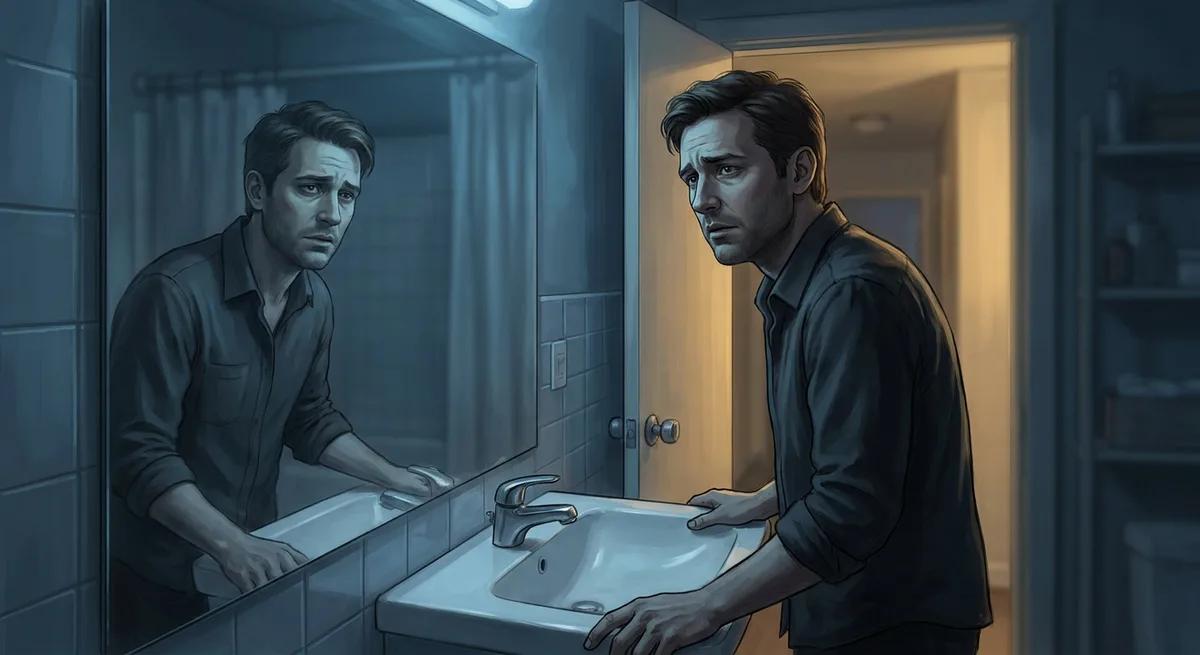
When someone says you are narcissistic
Why this test also asks about the opposite
A trap this test knows about
What a result does not mean
All 22 statements at a glance
If you would rather read first what this is about, here is the full questionnaire. In the test itself each statement appears on its own, and you say how often you experience it that way.
How you deal with others
- I cannot really allow emotional closeness.
- I prefer to do my own thing, whether or not the other person has a problem with it.
- I do not apologise. I practically never say “I am sorry”.
- I do not admit mistakes, even when someone points them out. I stay cool, withdraw, or push it back onto the other person.
- I quickly feel under pressure when someone expects or asks something of me.
- When criticised, I twist the facts so the other person is at fault. I even end up believing it myself.
- Other people’s feelings are rather too much for me.
- I am envious and begrudging.
- I think everyone around me is an idiot.
- I turn down offers of a relationship, I do not want to commit properly. Something better might still come along.
- Doing things for others is too much for me. If I choose to do it myself that is fine, but not when it is expected of me.
- I have been called narcissistic before.
How you treat yourself
- I put other people’s wellbeing above my own because I truly want them to be well. I help gladly, not because it is expected.
- I hold myself back because I do not dare say what I think, or because I believe my needs matter less. Often I do not even know what I want.
- I cling to the people I love and mother them.
- When there are problems in a relationship, my thoughts and feelings take over. I am caught in them and cannot let go.
- I tend to be led by my feelings. In emotional situations I find it hard to engage my reason.
- I let people take advantage of me. Saying no and setting boundaries is hard for me.
- I long for love so much that I will do or endure almost anything for it.
How you are doing in relationships
- In my close relationships I often feel drained or exhausted.
- My relationships often end in conflict or withdrawal, and I do not quite understand why.
- People who matter to me have told me that they feel hurt by me.
Frequently asked questions
Can I be a narcissist at all if I am asking myself this?
It is a counter-sign, but not an exclusion. People with a strongly narcissistic imprint typically see no reason to question themselves. The covert form, however, is more self-critical and often suffers from it. So an honest look is worth it.
Is the test anonymous?
Yes. It runs entirely in your browser, with no sign-up and no email address. Your answers are not stored unless you explicitly want that.
Is this a diagnosis?
No. The test is an orientation. Narcissistic personality disorder can only be assessed medically or psychotherapeutically. This test does not replace that.
How long does it take?
About four minutes, 22 statements in three blocks.
Can narcissistic patterns change?
According to EMOSOPHIE® yes, because there they are not a fixed trait but the consequence of an unresolved out-of-centre conflict. The KOMPASS work is the structured path to recognising and resolving that conflict.
And how about the other person?
According to EMOSOPHIE®, two opposite patterns find each other reliably. The second test looks at the other side of the relationship.
Is my partner a narcissist?