
Self-assessment based on EMOSOPHIE®
Is my partner a narcissist?
Based on the work of: Marion Kohn, “No Love” (2018)
What is typical of a narcissist, overt or covert? The world revolves around him or her. Only it is often not obvious: little shows on the outside, all the more in the relationship dynamic, often with a lot of suffering, self-doubt and despair. You are not imagining it. This test watches for the distinctive traits that reveal the covert narcissist too, whether it is about your husband, your wife or a relationship that is long over. The covert form in particular is widespread. There is a cause and a way, and only you can resolve your part. At the end you get an orientation, not a diagnosis.
Who is this about?
We never ask for a name. Your choice only changes how the statements are worded.
26 statements · about 4 minutes · free · no sign-up · your answers stay on your device and are not stored
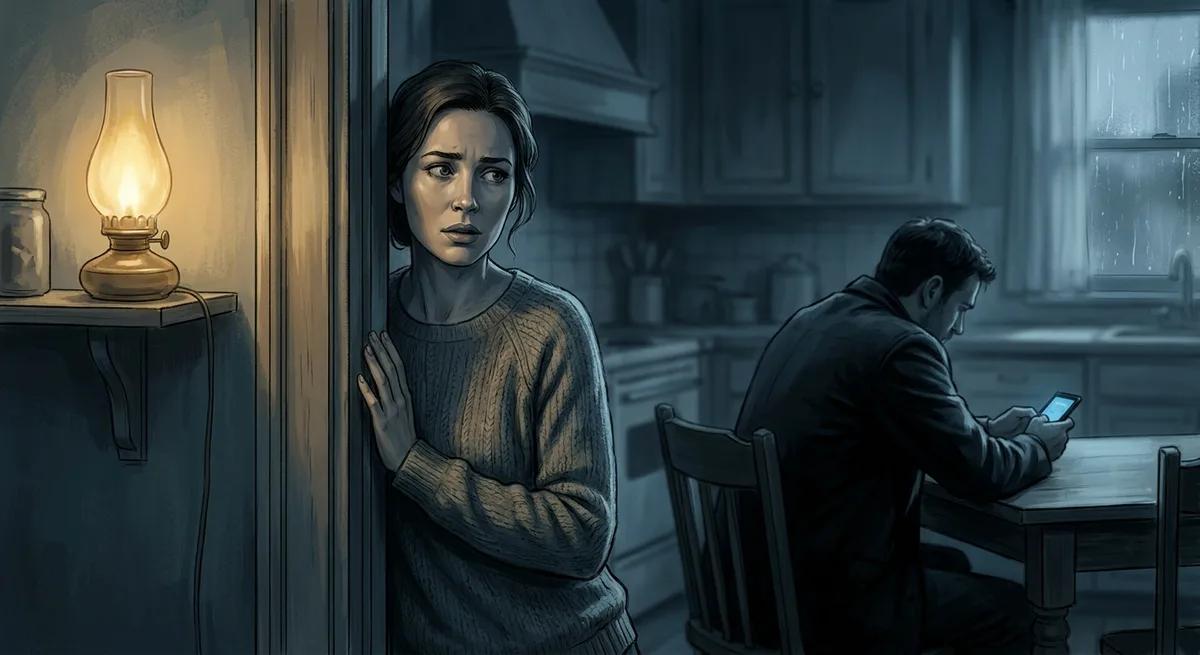
How you recognise a narcissist in a relationship
Is my husband a narcissist? And what about my wife?
Covert narcissist test: the quiet form most tests miss
Why the test also asks about you
The same result does not apply to every relationship
All 26 statements at a glance
If you would rather read first what this is about, here is the full questionnaire. In the test itself each statement appears on its own, and you say how often you experience it that way.
About this person
- When I look for real closeness, this person blocks it or pulls away.
- This person simply does their own thing, even when I have a problem with it. this person does not give me any security.
- This person never says an honest “I am sorry”.
- When pointed to a mistake, this person turns cool, withdraws, or pushes it back onto me.
- When I expect or ask for something, this person quickly feels put under pressure, maybe even gets annoyed and becomes defensive.
- When I raise criticism, this person turns it around so that I end up at fault, and seems to believe it.
- This person does not want to see my feelings and sensitivities, or is overwhelmed by them.
- This person is envious and begrudging, towards me as well.
- This person talks about other people as if they were idiots.
- Others have called this person narcissistic before.
Now about you
- I put other people’s wellbeing above my own because I truly want them to be well. I help gladly, not because it is expected.
- I hold myself back because I do not dare say what I think, or because I believe my needs matter less. Often I do not even know what I want.
- I cling to the people I love and mother them.
- When there are problems in a relationship, my thoughts and feelings take over. I am caught in them and cannot let go.
- I tend to be led by my feelings. In emotional situations I find it hard to engage my reason.
- I cannot really allow emotional closeness.
- I prefer to do my own thing, whether or not the other person has a problem with it.
- I do not apologise. I practically never say “I am sorry”.
- I do not admit mistakes, even when someone points them out. I stay cool, withdraw, or push it back onto the other person.
- I quickly feel under pressure when someone expects or asks something of me.
- Doing things for others is too much for me. If I choose to do it myself that is fine, but not when it is expected of me.
How you are doing with it
- I do not feel seen, I cannot get through, and I suffer from it.
- I doubt my own perception more and more often.
- I shape my behaviour largely around avoiding conflict with this person.
- It is no use saying anything. It is a fight to get my needs met with this person.
- I am afraid of this person.
Frequently asked questions
Is the test free?
Yes, completely, with no sign-up and no email address. Your answers stay on your device and are not stored unless you explicitly want that.
Is this a diagnosis?
No. The test is an orientation and describes patterns in a relationship. It is not a diagnosis and does not replace psychotherapy or medical treatment.
How long does it take?
About four minutes. There are 26 statements in three short blocks.
Where do the statements come from?
From the practice of Marion Kohn, founder of EMOSOPHIE®, set out in her book “No Love” (2018).
Can I take the test about my mother or another family member?
Yes. At the start you choose who it is about: partner, ex, mother, father, another family member such as a sibling or an adult child, a friend, or someone at work. The statements adapt, and the result always applies to that one relationship.
Should I show the result to my partner?
Better not. A result like this in a tense relationship rarely leads to a conversation and often to escalation. It is meant for you, not as evidence.
What is a covert narcissist?
The quiet form. It does not appear grandiose but often reserved or vulnerable, and it withdraws instead of attacking. Typical is a combination of no apology, unadmitted mistakes, closeness that breaks off, and feeling under pressure the moment anything is expected.
And how is it with you?
Both patterns grow from the same root. If you want to know why you keep ending up in relationships like this, it is worth looking at your own side too.
Am I a narcissist?