
Self-assessments based on EMOSOPHIE®
Narcissist test
Three free tests based on the trait lists from the book “No Love” by Marion Kohn: about your partner, about yourself, and about the giving side, the helper syndrome. All of them run without sign-up, without an email address and entirely in your browser. Your answers are not stored.
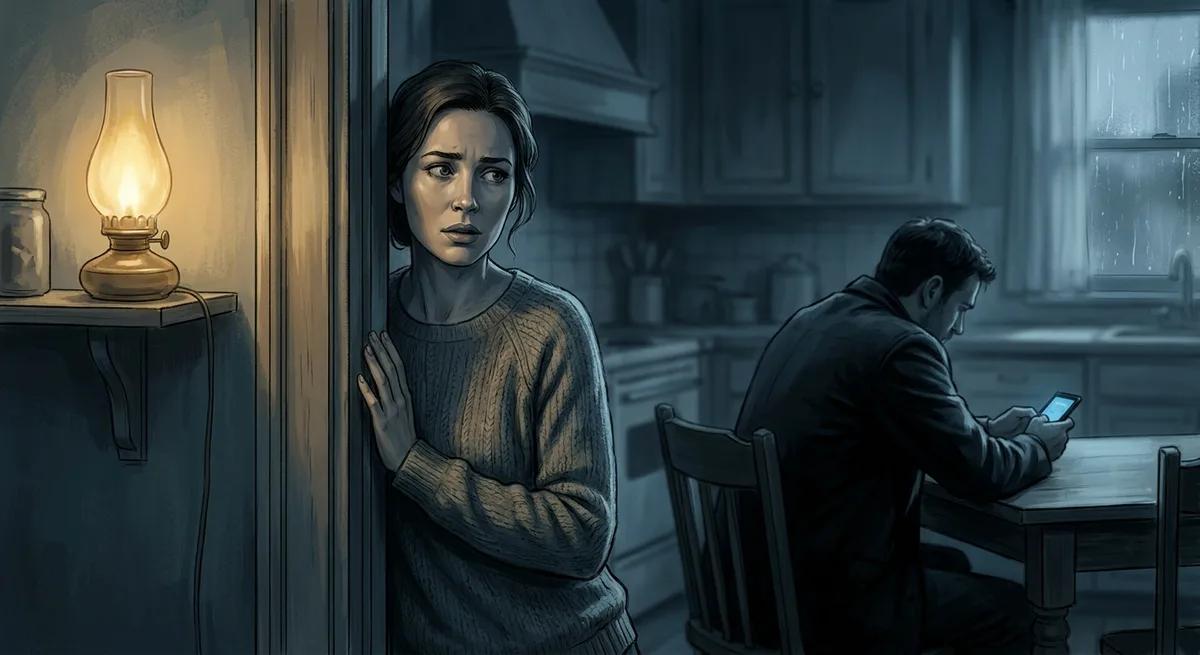
Is my partner a narcissist?
Is your husband, wife or partner narcissistic? Free test, no sign-up: 26 statements based on Marion Kohn, covering the covert form too.
Start the test→26 statements · about 4 minutes
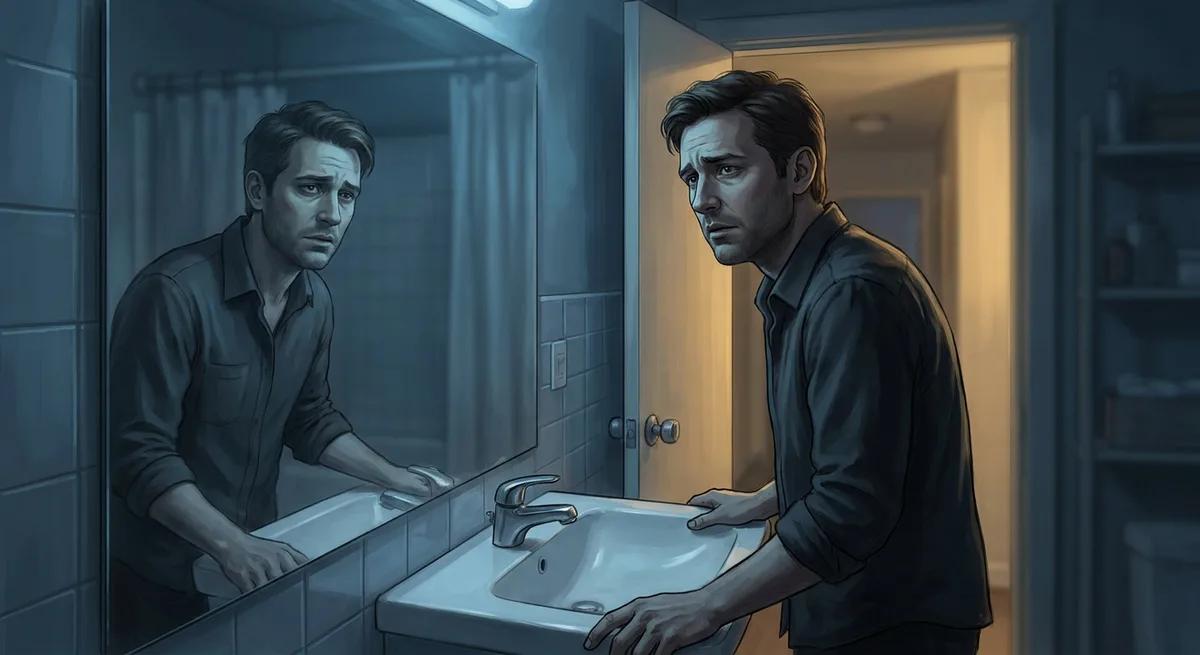
Am I a narcissist?
Someone told you that you are narcissistic? 22 statements from the book “No Love” by Marion Kohn. Free, no sign-up, no verdict about you as a person.
Start the test→22 statements · about 4 minutes

Helper syndrome test
Do you help until nothing is left of you? Free helper syndrome test, no sign-up: 16 statements based on Marion Kohn, with a look at the cause.
Start the test→16 statements · about 4 minutes
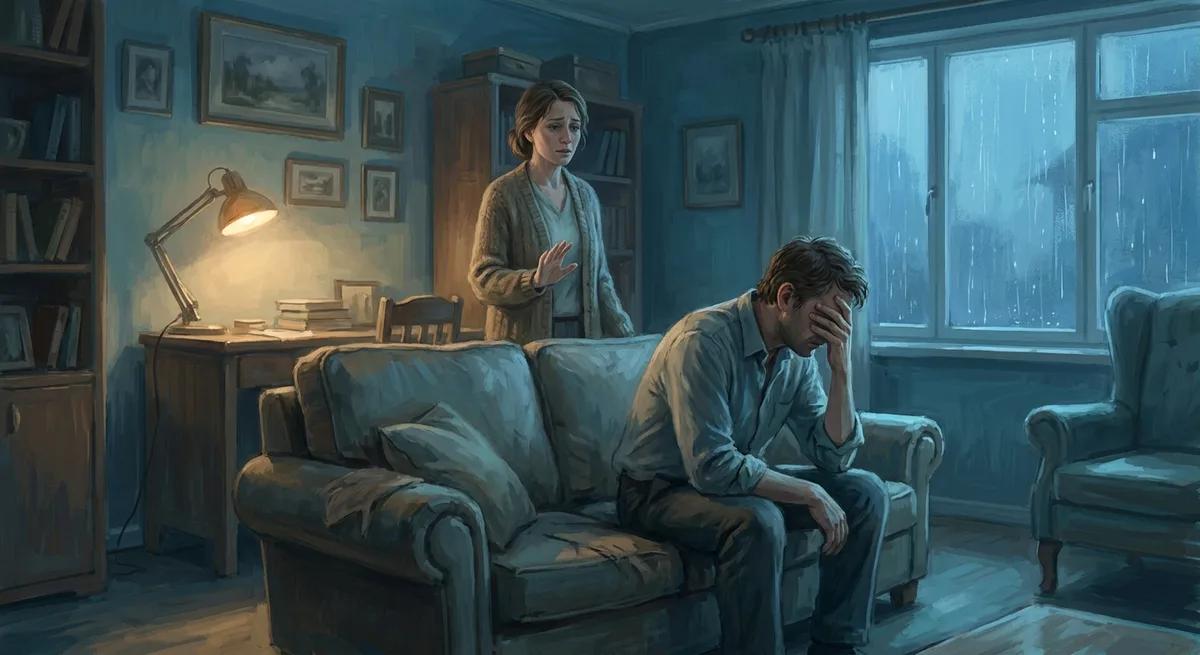
The covert narcissist test
Quiet, wounded, seemingly modest: this free test based on Marion Kohn looks for the covert form of narcissism that standard checklists miss. No sign-up.
Start the test→26 statements · about 4 minutes
What is a narcissist, really?
In everyday language the word describes someone who puts themselves at the centre, shows little compassion, needs admiration and can barely take criticism. When people notice narcissistic behavior in someone, that is almost always what they mean: a pattern in how someone deals with others, not an illness.
That has to be kept apart from narcissistic personality disorder. This is a clinical diagnosis, and only doctors and psychotherapists make it, after a personal conversation and against fixed criteria. No test on the internet can do that, and neither can this one. If you read here that patterns are showing, that expressly does not mean anyone has that disorder.
This distinction is not legal caution but practical. Whether someone meets the criteria of a diagnosis almost never helps you in daily life. Which pattern is at work between the two of you, and where it comes from, does.
People often ask about types of narcissism, or about narcissist traits in a woman as opposed to a man. The pattern itself does not differ. What differs is how loudly it appears, and that is exactly where most tests go wrong.
Where narcissism actually comes from
Search online for the cause and you will find the same answer almost everywhere: a difficult childhood. Too little attention, too much pressure, insecure attachment, hurtful parents. It sounds plausible and still helps no one, because it explains too much. On that reading, practically any troubled childhood could produce narcissism. But it does not. The vast majority of people with a difficult childhood do not become narcissists.
This is exactly the point where Marion Kohn refused to let go. Over years she laid the life stories of people with narcissistic and with altruistic patterns side by side and looked for something they all shared and others did not. She found it, and it is remarkably concrete.
The out-of-centre conflict
Marion Kohn calls this common denominator the out-of-centre conflict: an early, never resolved conflict that throws a person off the balance between themselves and their connection to others. Out of that distress two survival strategies grow. One is excessive self-centredness, the thing we call narcissism. The other is constant self-abandonment, altruism. Both have the same origin, and two people can live through something similar and develop opposite patterns from it.
How exactly this conflict arises, and what Marion Kohn looks for to recognise it in an individual case, is something we deliberately do not describe here. It is the core of her method, and it unfolds in the work on your own case, not in a summary. For the test you do not need any of it: the test looks at what can be observed, at behaviour in one particular relationship. If your result points to such a conflict, the KOMPASS work is where it is traced.
Why this cause is good news
If a pattern grew out of a conflict, it is not a trait. It can dissolve once the conflict is worked through.
Why narcissist and altruist find each other so reliably
If both patterns grow from the same root, that explains something many people take for coincidence or their own bad luck: these two find each other with astonishing reliability, and they find each other again and again.
One needs someone who gives without demanding. The other needs someone to give themselves up for. Each finds in the other exactly what fits their own conflict. That is why the beginning of such relationships often feels unusually right, and why it becomes so hard to get out later.
The internet has vivid images for this: a narcissist’s dream partner, it says, is the strong, empathic woman who holds everything together. There is something to that, only it is not a women’s issue. The narcissist and the strong, giving partner are a common pair, and the same holds with the roles reversed. Anyone who has lived in such a relationship for long also knows what victims of narcissists report most often: exhaustion all the way into the body, self-doubt, endlessly explaining their own perception. That is why the second part of the test expressly asks how you are doing.
One qualification matters here, and Marion Kohn insists on it: this pairing is not a law of nature. Two people with strongly narcissistic patterns can also live together and get along well. Speaking of a problem is only justified when someone actually suffers. That is exactly why the tests ask at the end how you are doing with the situation, and only state the mirror finding if you confirm it.

The loud form: the traits everyone knows
Search for narcissist symptoms and you will find similar lists everywhere, usually ten traits of a narcissist: self-centredness, a strong need for admiration, little compassion, sensitivity to criticism, devaluing others, envy, entitlement, control, exploiting relationships and an inflated self-image. The word symptoms is misleading, because a pattern is not an illness. But the list itself describes the loud, grandiose form quite well.
The question about types of narcissism comes up in every search too: grandiose or covert, overt or vulnerable. For everyday life the simplest distinction is enough. There is a loud form everyone recognises at once, and a quiet one almost everyone misses. Our tests cover both: the loud form shows through the classic traits contained in the statements. The quiet one needs more, and that is what comes next.
Is my partner a narcissist?
Is your husband, wife or partner narcissistic? Free test, no sign-up: 26 statements based on Marion Kohn, covering the covert form too.
Start the test→26 statements · about 4 minutes
Am I a narcissist?
Someone told you that you are narcissistic? 22 statements from the book “No Love” by Marion Kohn. Free, no sign-up, no verdict about you as a person.
Start the test→22 statements · about 4 minutes
Helper syndrome test
Do you help until nothing is left of you? Free helper syndrome test, no sign-up: 16 statements based on Marion Kohn, with a look at the cause.
Start the test→16 statements · about 4 minutes
The covert narcissist test
Quiet, wounded, seemingly modest: this free test based on Marion Kohn looks for the covert form of narcissism that standard checklists miss. No sign-up.
Start the test→26 statements · about 4 minutes
Covert narcissist test: why the quiet form is almost always missed
Everyone knows the loud form: grandiose, dominant, always centre stage, hypersensitive to criticism. It is the rarer case. Far more common and far harder to grasp is covert narcissism, also called vulnerable narcissism. It appears quietly, often even modest or fragile, and it withdraws instead of attacking.
Anyone looking for it with a classic trait list will not find it. That is not coincidence but inevitable: it lacks exactly the conspicuous traits such lists are made of. A test that only counts how many points apply will regularly produce an unremarkable result for the covert form.
Marion Kohn describes instead a particular combination of five points that occur together and that you cannot miss once you know what to look for: no apology comes. Mistakes are not admitted, instead things turn cool. No responsibility is taken for mistakes, the problem is simply not discussed. The moment anyone expects something, pressure arises. And emotional closeness is not really allowed.
All three tests watch specifically for this combination and name it separately, even when everything else looks unremarkable. This is where they differ most clearly from anything else you will find online.
The five points of the covert form
No apology · no admitted mistake, coolness instead · no responsibility for mistakes · immediate pressure when something is expected · no real emotional closeness.
Toxic or narcissistic? The difference almost nobody draws
A narcissistic mother can affect her children the way people today usually describe a toxic person: you leave every encounter smaller than you arrived. From the outside the two look the same. In practice they are not.
“Toxic” describes an effect. It says that something is not good for you, which is an important and valid observation. But it says nothing about why a person acts that way, and therefore nothing about whether it can change. A toxic relationship can have many causes: exhaustion, fear, old wounds on both sides, or simply two people who do not fit.
Narcissistic, by contrast, describes a pattern with a specific origin. And that is where it becomes practical: once you know where a pattern comes from, you also know where to start. That is why these tests do not stop at the finding that something is not good for you. And it is why anyone looking for a toxic relationship test gets more than a checklist here: an answer to which pattern sits behind it.
Narcissist traits in women and in men
Searches for narcissist traits female and for male narcissist traits usually expect two different lists. They are not two different patterns. What differs is the volume.
Narcissism in women appears less often as the grandiose form and more often as the quiet, withdrawn one. That is precisely why classic trait lists miss it. Marion Kohn describes a confusion that fits here: people with a narcissistic imprint tick exactly the statements about self-sacrifice. Not because they sacrifice themselves, but because even the smallest thing done for someone else feels like a burden.
That is why two statements in our tests name their motive, and a third one checks against it. A test that only counts arrives at the opposite result in exactly these cases.
A narcissistic mother, a narcissistic father
The most common reason people look for a narcissism test is not a partner but their own family. What a narcissistic mother or a narcissistic father does is not confined to childhood; it shapes what someone expects from every later relationship.
According to EMOSOPHIE® this is often where the origin lies, and on both sides: an early conflict between parent and child that nobody ever resolved can produce hardness on one side and guilt-driven self-sacrifice on the other, although nobody could help any of it. Both patterns grow from the same event, and both can be resolved.
Daughters of narcissistic mothers in particular know the feeling of still fighting at forty for a recognition that never comes. The late effects often reach into their own choice of partner. And because the covert form is so quiet, many of them still doubt whether they are imagining all of it.
Many people therefore look specifically for a narcissistic mother test. That is exactly what the first of our tests is for: at the start you choose who this is about, mother, father or another family member, and the statements adapt. The result often differs from the one for a partner, and that difference is the actual insight.
Why this test has 26 statements and not 40
More questions feel more thorough, and for an instrument that calculates a number that is true. Not here.
Our tests work with 26, 22 and 16 statements because they do not count, they watch for a specific combination. Marion Kohn’s five points for the covert form are fully contained in them, and those are what decide the finding. Forty statements would not sharpen the result, they would only lose half the people on the way. Anyone who wants a closer look gets the full set after the result.
All tests are free, need no sign-up and no email address. And to be clear about what they are not: this is not a narcissistic personality disorder test. It is an orientation about patterns in one particular relationship.
Narcissism is not a trait but a shift
From this follows something new to most people, and it makes all the difference: these patterns are not attached to a character but to a particular relationship. They arose because a conflict with a particular person in a particular place was never resolved.
Marion Kohn describes cases in which the same person is hard and hurtful towards their mother and warm and open towards their father. It is the same character, and they are two entirely different patterns, because something stands between them and the mother that never stood between them and the father.
That is why both tests first ask who this is about. And that is why no result says “this person is”, but always “in this relationship there are”.
And that is why something becomes possible that the usual explanations do not offer: if the pattern grew out of a conflict, it can dissolve once that conflict is worked through. This is exactly what Marion Kohn developed the KOMPASS work for, the structured path of insight within EMOSOPHIE® to trace such conflicts and come back into your own centre.
What we do not promise you
We are not presenting you with a clinical study, and we do not claim to have one. Marion Kohn says as much in her own book. Her work rests on years of counselling practice, on systematically comparing many cases, and expressly also on searching for counter-examples.
These tests are not a diagnosis and cannot be one. Establishing narcissistic personality disorder is a matter for doctors and psychotherapists. What these tests do is something else, and at the start often worth more: they give you language for what you are experiencing, and a first hint of where it might come from.
So what now?
The fastest way forward is simply to begin. Each test takes only a few minutes, you need no account, and your answers never leave your device. If you are here because of someone else, take the first one. If someone told you that you are narcissistic, take the second. And if you give until nothing is left of you, take the third, the helper syndrome test.